For today’s sales teams, it’s often necessary to bounce between multiple tools to perform daily tasks, as well as manage customers and deal information across the sales lifecycle. Unfortunately, this can lead to potential deals falling through the cracks and less time for finding lucrative business opportunities through data sourcing and research.
HubSpot integrations allow you to connect the other apps to your CRM, enhancing it and adding additional capabilities. This can streamline your sales management and help you stay ahead of the curve.
If you’re wondering what integrations are, how to use them, and which are the best ones, you’ve come to the right place! In this article, we’ll discuss all the aspects of HubSpot CRM integrations, and recommend some you might find useful, so you have the necessary information to use them and streamline your business processes.
Most sales teams in 2023 use a combination of platforms that include tools like sales intelligence, contract management, e-signature, lead scoring, and customer data platforms. When information isn’t consolidated, it can leave salespeople repetitively checking and updating data across platforms.
By the time a salesperson finds what they were looking for, they might have let a deal slip away – and can waste their valuable time in the process. HubSpot integrations can bridge the gap between your CRM and other apps, helping you align your business processes and get direct access to data. Overall, this is why integrations have become essential in recent years.
Now that you know why HubSpot CRM integrations are essential for sales, here are five excellent sales-related integrations you can use today!
Bringing Salesforce into HubSpot unlocks many possibilities for a sales team. It gives them quick access to contacts and lead data, like email opens and website activity. Plus, any changes they make are updated on both platforms. Salesforce automation will also help you streamline your sales process management.
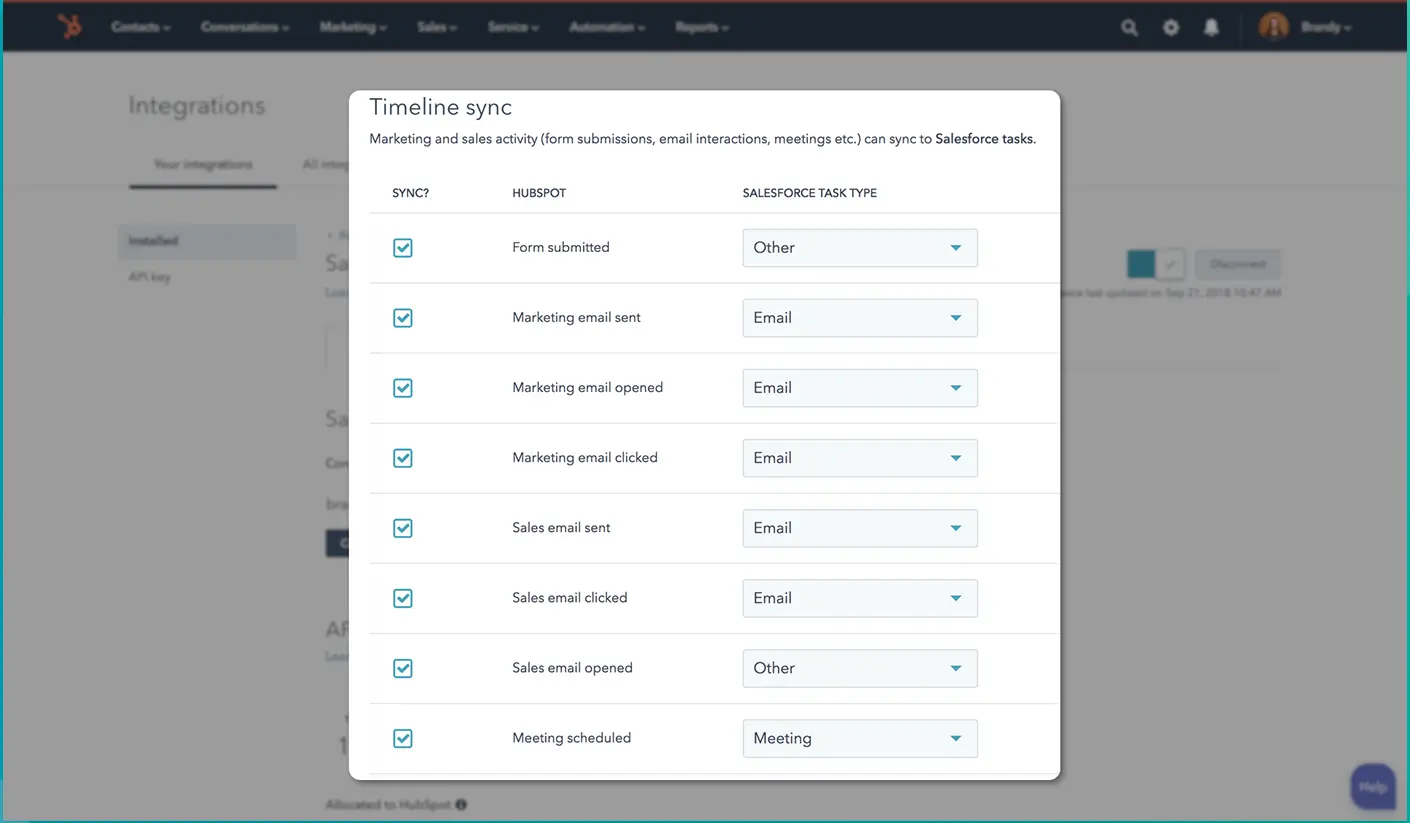
This frictionless access to lead and revenue data clears the way to let salespeople perform at their best. It is also easy to use and can be implemented by a non-technical person.
Known as the “first CRM platform made for salespeople, by salespeople,” Pipedrive is a sales CRM and pipeline management app. This integration allows you to sync contacts, deals, and other data between Pipedrive and HubSpot.
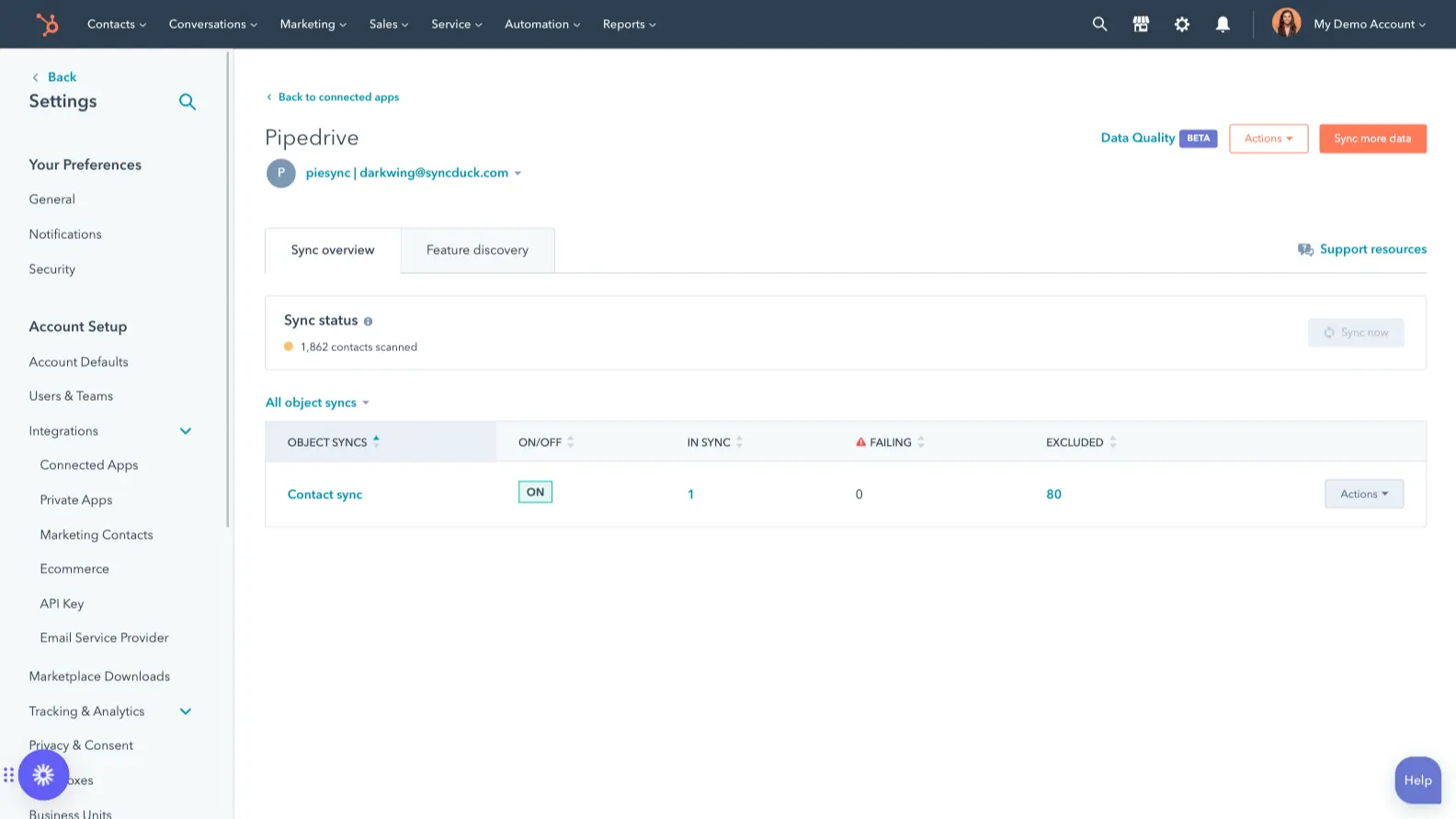
Similar to the Salesforce integration, this integration is capable of two-way sync, allowing you to manage all your sales processes in one place.
A top-rated sales engagement platform, SalesLoft assists you with everything from prospecting businesses to expanding your customer base. With this integration, you can now bring it to HubSpot.

Once set up, your existing data will sync right away. After that, you can set it to one- or two-way data sync. The platform also offers default and custom field mappings to organize your data.
Managing electronic signatures is an essential aspect of sales. HelloSign (formerly Dropbox Sign) allows you to send and receive e-signatures and offers online document and contract signing features.
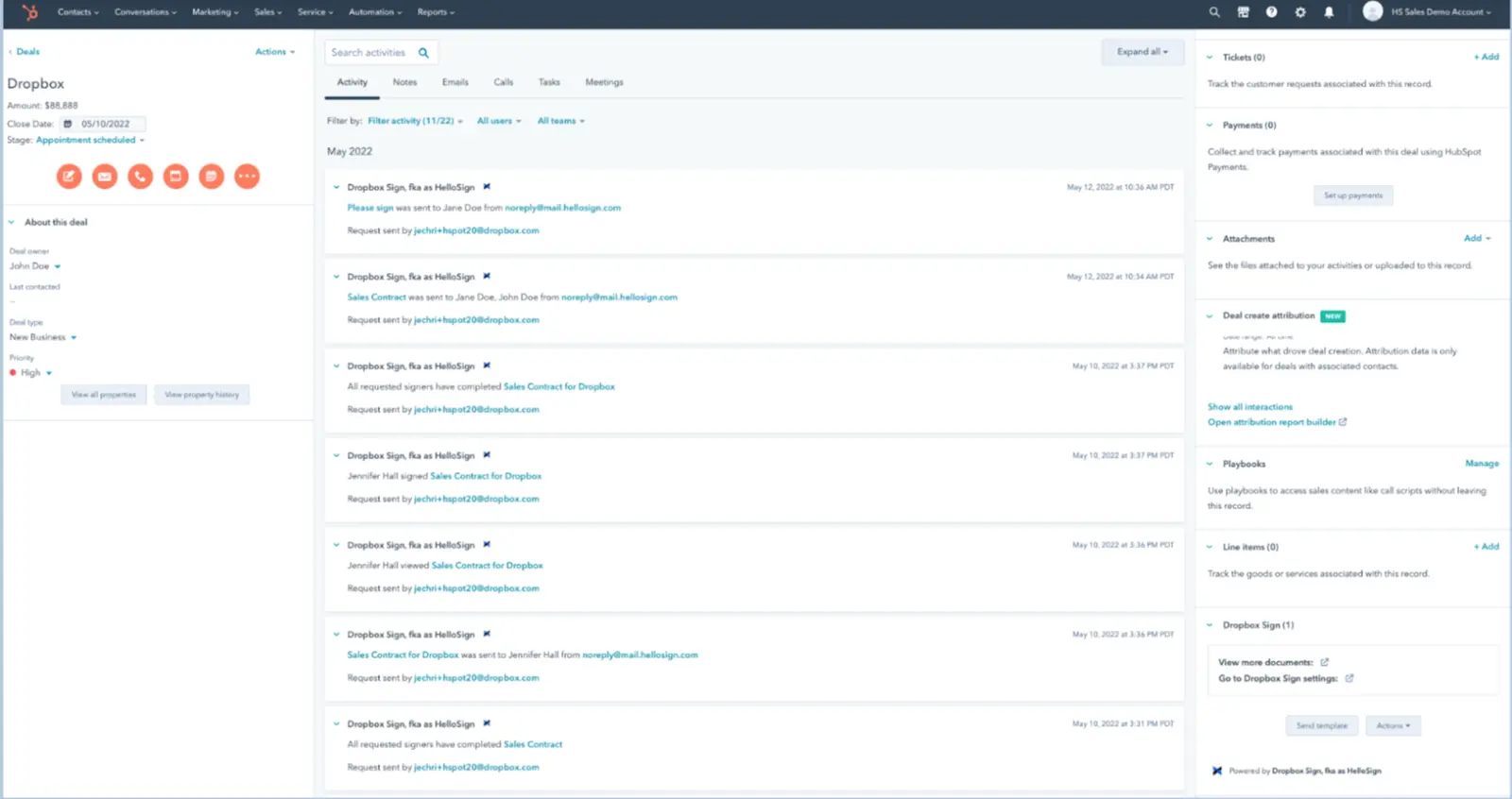
This integration notifies you when an action is taken on any document sent with HelloSign. This data can help salespeople determine where a customer is in the sales pipeline and how to guide them further.
Every salesperson has to deal with their fair share of non-selling tasks, like creating, approving, and adding e-signatures to proposals, quotes, and contracts. PandaDoc takes care of all that.
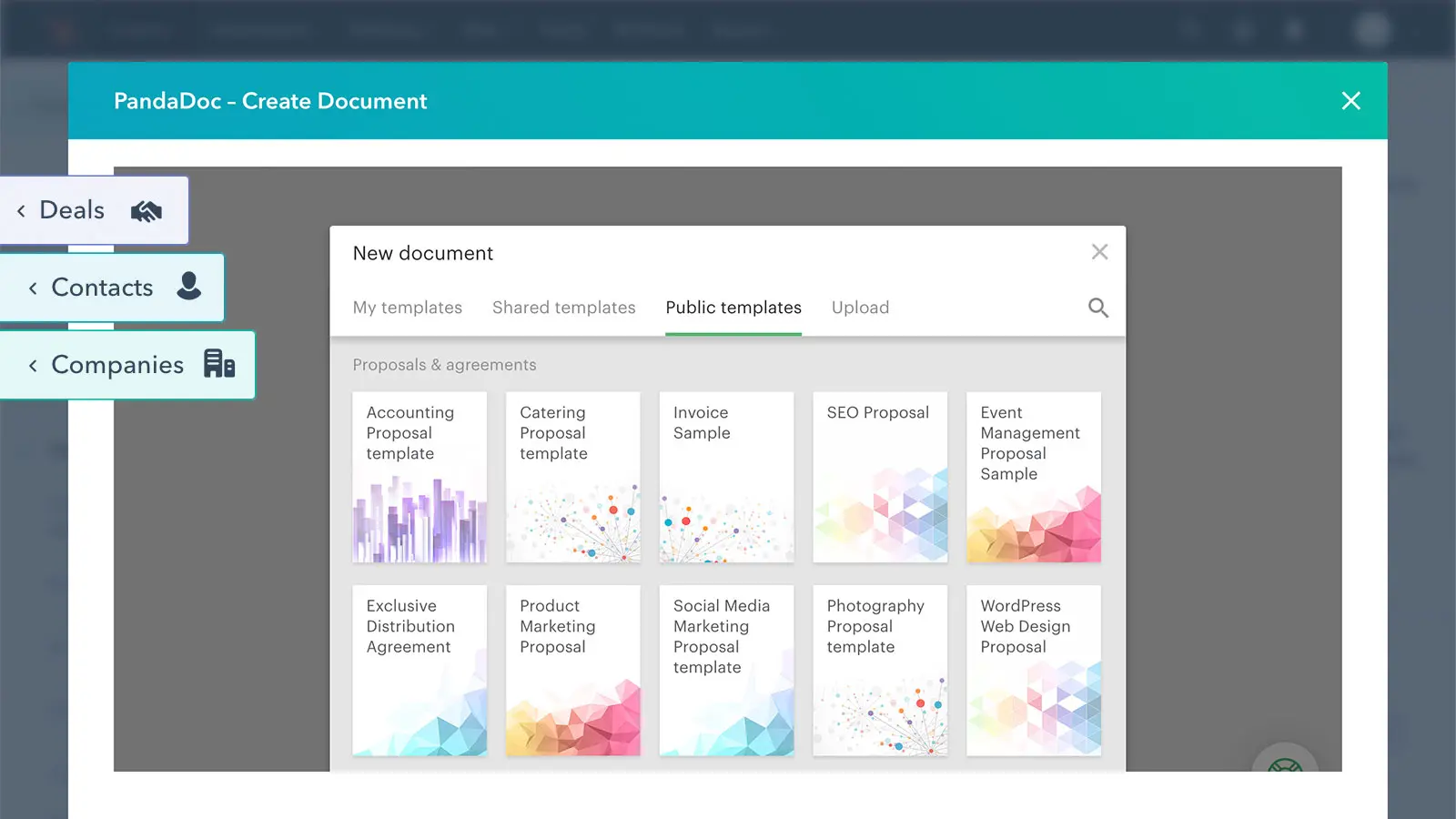
With this integration, you can further streamline your sales process by managing all your sales documents in one place.
Simplifying your sales workflows has never been more essential to closing deals and reaching targets. Hopefully these integrations can help streamline your tasks and ensure your data is where you need it, when you need it.
When integrating with HubSpot, be sure to check the Requirements, Shared data, and Resources sections of these integrations in the HubSpot App Marketplace. If you'd like recommendations for integrations that cover different business processes, see this HubSpot article.
Once you consolidate all your business processes in HubSpot, it becomes much easier to automate your workflow. For this reason, HubSpot offers integrations with automation platforms like Make and Unito.
If you want an automation platform that works locally on your computer, you can try out Bardeen, a workflow automation extension in Chrome. It is integrated with HubSpot and many other popular apps like Notion, Pipedrive, and Google Sheets.
Now, let’s discuss some HubSpot automations in Bardeen.
Bardeen makes it easy to transfer data from HubSpot (like products, tickets, and deals) to other platforms in just a few clicks. Here are some automations that can help you do that.
Artificial intelligence (AI) is getting better every day at workflow automation. It can understand and automate complex tasks like never before. Bardeen is integrated with OpenAI and lets you perform HubSpot automations powered by GPT. Let’s look at a few such automations.
In addition to HubSpot, you can use OpenAI automations with other apps as well. Bardeen also is about to launch its own AI features. Sign up for the waitlist to stay updated!
In Bardeen, you can also use automations with triggers. In this case, you can use these automations to perform a task in a third-party app when a deal, product, company, or contact is added to HubSpot.
These are only a few handpicked examples of the HubSpot automations that are possible with Bardeen. Although you can also create your own automations, you’re free to use the pre-built Playbooks and Autobooks as often as you wish, and we’re adding more all the time. We also have a variety of other sales-related automations that work with popular apps you might use.
HubSpot CRM integrations help you streamline and consolidate your workflow to save time and increase productivity.
No matter what aspect of your business you want to improve, there’s probably an integration for it.
Now that you know about HubSpot CRM integrations, you can put your know-how into action. Whether Salesforce or PandaDoc, try one of the above integrations. Open their page in the HubSpot App Marketplace and click on View Setup Guide for further details.
When automating business processes, AI can be a powerful tool. The sooner you implement AI into your business, the better. Get started by learning about the best AI tools for lead process management.







SOC 2 Type II, GDPR and CASA Tier 2 and 3 certified — so you can automate with confidence at any scale.